Ask anyone who works with health data from more than one hospital and you will hear the same complaint. The information exists, but it does not line up. A diagnosis recorded in Kampala may be coded one way, the same diagnosis in Kigali another way, and a third way again in Cape Town. Before any of it can be compared or analysed together, someone has to do the work of making it speak a common language.
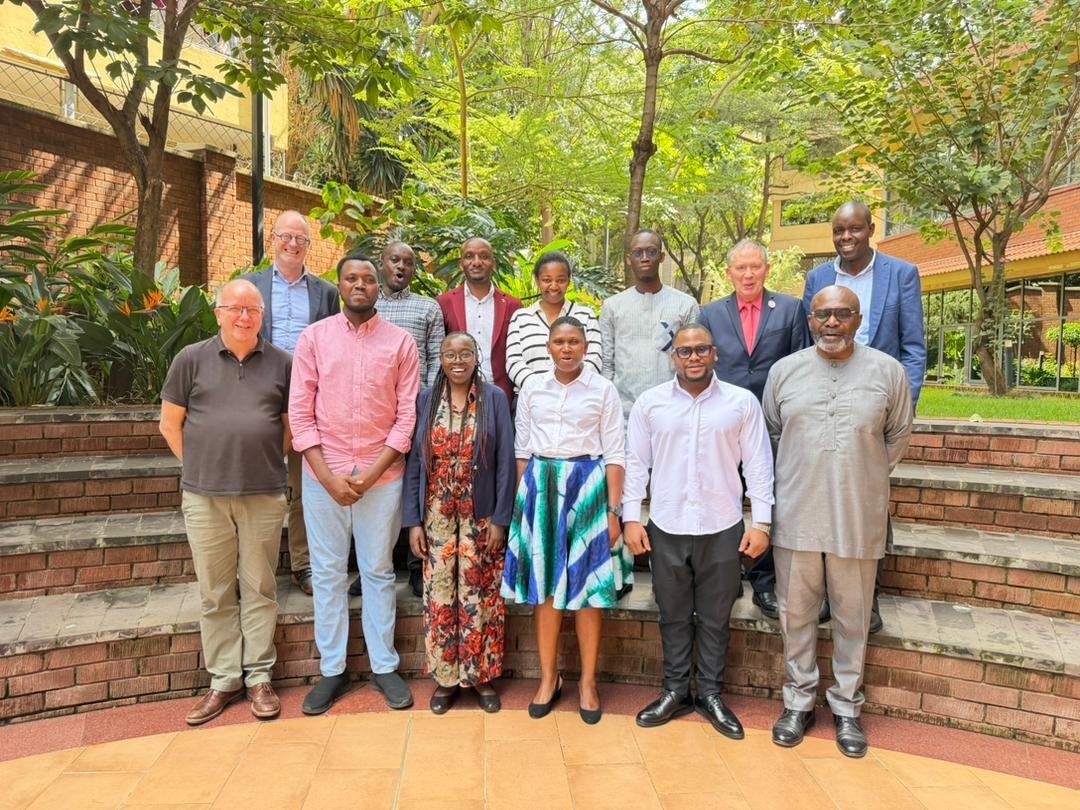
That work was the focus of a fourday workshop in Nairobi this May, where nine BRIDGE NETWORK PhD trainees came together for their first structured practical research activity: the OMOP Common Data Model (CDM) Workshop. The workshop ran from 18 to 21 May 2026 at the Fairview Hotel, and it marked the point where the trainees stepped out of preparatory and theoretical learning and into hands on research practice.
All nine trainees currently in post attended in person, travelling from six institutions across the network:
- Hillary Koros, Aga Khan University
- Viola Chepkirui, Aga Khan University
- Bridget Magoba, Uganda National Institute of Public Health
- Peter Baranga, Mountains of the Moon University
- Steven Kerera, Rwanda Biomedical Centre
- Christian Ndinda, Rwanda Biomedical Centre
- Farid Ally, Institut Régional de Santé Publique Comlan Alfred Quenum (IRSP-CAQ)
- Hossana Agbangla, Institut Régional de Santé Publique Comlan Alfred Quenum (IRSP-CAQ)
- Makinda Ndinda, University of Cape Town
Theworkshop opened with an introduction to the BRIDGE NETWORK itself, then moved into federated data networks and the OHDSI ecosystem, the structure of the OMOP Common Data Model, and the standardised vocabularies that allow different datasets to carry shared meaning.
From there the week became steadily more practical. Trainees worked through OMOP vocabulary exercises, then moved into the Extract, Transform and Load (ETL) process, mapping source data into the OMOP structure. A session on data quality and OHDSI tools followed, covering how to tell whether harmonised data is complete, consistent and genuinely usable.
The centrepiece of the workshop was a mini harmonisation project. Trainees were placed into groups, handed a practical harmonisation task, and left to work on it over the closing days before presenting their results to the consortium members.
That presentation session did something a lecture cannot. It gave the trainees space to talk openly about what had gone wrong, which approaches had worked, and what they would do differently next time. For several of them, it was a first real encounter with the messiness of turning heterogeneous health data into a common structure.
The workshop was evaluated by the trainees. All nine studens completed the training feedback questionnaire, a 100 percent response rate, producing 117 ratings across 13 evaluation items. The questionnaire covered four areas: learning outcomes and relevance, delivery and instruction, training materials and resources, and impact and application.
The results were consistently positive. Trainees reported that the content was relevant to their research and professional goals, that it increased their knowledge, that it addressed real gaps in their skills, and that they felt more confident applying what they had learned.
There was also one clear and recurring request: more time. Several trainees were new to the practical side of OMOP CDM and wanted longer with the exercises. It is fair feedback, and it confirms something the network already recognises: harmonisation is a skill built through repetition, not a topic covered once.
The workshop leaves the cohort with a shared technical foundation. Each trainee is working on a different doctoral project, but they now have a common vocabulary for talking about data structure, mapping, quality and comparability, which matters a great deal for the cross site and collaborative research the network exists to support.
Further practical sessions, refresher training, and project specific technical support are planned as the trainees move deeper into their doctoral research.