Call for PhD Scholarship Applications: Doctoral Scholarship in Integrated Data Science and Health Informatics (Research PhD). Major: Infectious Diseases.

CALL FOR PHD APPLICATIONS Deadline: 21 September 2026 Doctoral Scholarship in Integrated Data Science and Health Informatics (Research PhD) Major: Infectious Diseases BRIDGE NETWORK Project – Kenya / Aga Khan University Host / recruiting institution Aga Khan University (AKU), Nairobi, Kenya Department Centre of Excellence for Women and Child Health EA (CoEWCH EA) Degree awarding institution University of Cape Town (UCT) Application language English Closing date 21 September 2026, 8:59 PM (Kenya time) About the BRIDGE NETWORK Programme An African-European consortium of 6 SSA countries and 2 European countries, gathering 11 partners is proposing a unique and innovative scalable training program and network that will produce empowered infectious diseases experts to lead and drive research from and for sub-Sahara Africa (SSA), at levels of early-stage career (post-graduate certification and doctoral) and mid-stage career (post-doctoral) in an integrated program of health informatics and data sciences (BRIDGE NETWORK program). The program consortium will set up 6 BRIDGE NETWORK Nodes (BNNs) in SSA countries (Benin, Ethiopia, Uganda, Kenya, Rwanda, and South Africa). The BNNs will serve as training setting, field research setting and a hub for harmonized infectious diseases data, and all will recruit candidates from their countries for certification program, and doctoral and post-doctoral fellowships, but only 3 BNNs will be the degree awarding institutions. The degree awarding BNNs have been selected based on the existing university capacity to offer a degree awarding program or built on the existing partnerships between selected SSA public health institutes and local universities with degree awarding programs capacity. The program leverages the established collaborations between European and SSA institutions, utilizing accumulated medical data, including Electronic Health Records, registries, and biobanks. At the end of 54 months, the program will have strengthened the institutional research leading capacities with maximum 20 trainees per BNN with post-graduate certification, a total of 10 graduates with PhDs and a total of 4 post-doctoral fellows, skilled for harmonizing and analysing fragmented large data to derive data-driven insights and guide health policies. The BNNs embedded within public health institutions, with continuous mentorship from an international scientific community and a ready to use large amount of data, ensure the sustainability of training and collaborative research beyond the program grant. About Aga Khan University and CoEWCH EA Aga Khan University is a private, autonomous and self-governing international university. The Centre of Excellence for Women and Child Health EA conducts research, knowledge translation, capacity building and evidence-based advocacy in reproductive, maternal, newborn, child and adolescent health and rights, and infections, while contributing to health-systems strengthening and quality of care. Scholarship / Research Focus The successful candidate will undertake a field-based clinical or public-health research study leading to a PhD thesis. The research should apply integrated health informatics and data-science approaches to infectious diseases and make use, where appropriate, of harmonised health data such as electronic health records, registries and other relevant data sources. Key Responsibilities Conduct a field-based clinical or public-health research study leading to a thesis defence. Conduct literature reviews and develop research proposals and protocols. Follow up and maintain compliance with relevant ethical and regulatory approvals. Initiate and lead research activities in collaboration with supervisors and the BRIDGE NETWORK team. Attend BRIDGE NETWORK workshops, training activities and research meetings. Analyse and interpret scientific problems using appropriate quantitative, statistical, health-informatics and data-science methods. Synthesize and communicate findings to scientific, policy and other relevant audiences. Contribute to mentorship and supervision of MSc students at AKU, where appropriate. Eligibility Criteria For this Kenya-based call, the successful applicant will be recruited through Aga Khan University. Applicants must meet the BRIDGE NETWORK eligibility requirements below: Must never have been enrolled in another PhD programme at the date of recruitment. Should be resident in a participating BRIDGE NETWORK country (Benin, Rwanda, Kenya, Uganda or South Africa) at the time of application. For this AKU/Kenya position, applicants must be eligible to be recruited and based in Kenya. Should commit to stay and work in the recruiting country during the project period; BRIDGE NETWORK training rotations or internships in participating countries are permitted. Must hold a Master’s degree in Public Health, Health Sciences, or a closely related field relevant to the proposed PhD research. Must fulfil the admission requirements of the selected BRIDGE NETWORK PhD degree-awarding university. Must be not older than 45 years at the time of application. Additional Selection Requirements / Assets Strong quantitative, statistical and/or data-science background. Working knowledge of quantitative data analysis using statistical software. Demonstrated scientific writing ability and strong written and oral communication skills in English. Experience working in a health-related research field. A publication record in public health, health sciences, data science or a related field is an advantage. Strong interpersonal and leadership skills, with ability to work independently and meet deadlines. Degree-Awarding Institution Applicants must satisfy the doctoral entry benchmarks of the University of Cape Town (UCT). For the PhD in Public Health, this requires a relevant Master’s degree, a strong research track record, and a comprehensive preliminary research proposal. How to Apply Applications must be submitted in English. Applicants should provide the following documents: Motivation letter, and the proposed area of PhD research. A brief concept idea (maximum 10 lines) in infectious diseases showing how health informatics and data-science techniques will be combined. Copies of academic degree certificates. Certified copies of academic transcripts, including an official explanation of the grading system where applicable. Two letters of recommendation from academic referees (at least Associate Professor level). Certified copy of birth certificate. Curriculum vitae, including scientific publications where applicable and an explanation of any significant gaps in the academic/professional trajectory. Duration and Commencement The PhD programme is generally up to three years. Commencement is subject to successful BRIDGE NETWORK selection and university admission. Kenya Contact Prof. Marleen Temmerman, MD, PhDAga Khan University – Centre of Excellence for Women and Child Health EAEmail: marleen.temmerman@aku.edu IMPORTANT: Eligibility will be assessed against the BRIDGE NETWORK criteria above in addition to the scientific and institutional requirements of the position. Applicants should ensure that they meet all eligibility and university-admission
From Theory to Practice: PhD Trainees Take On Health Data Harmonisation in Nairobi
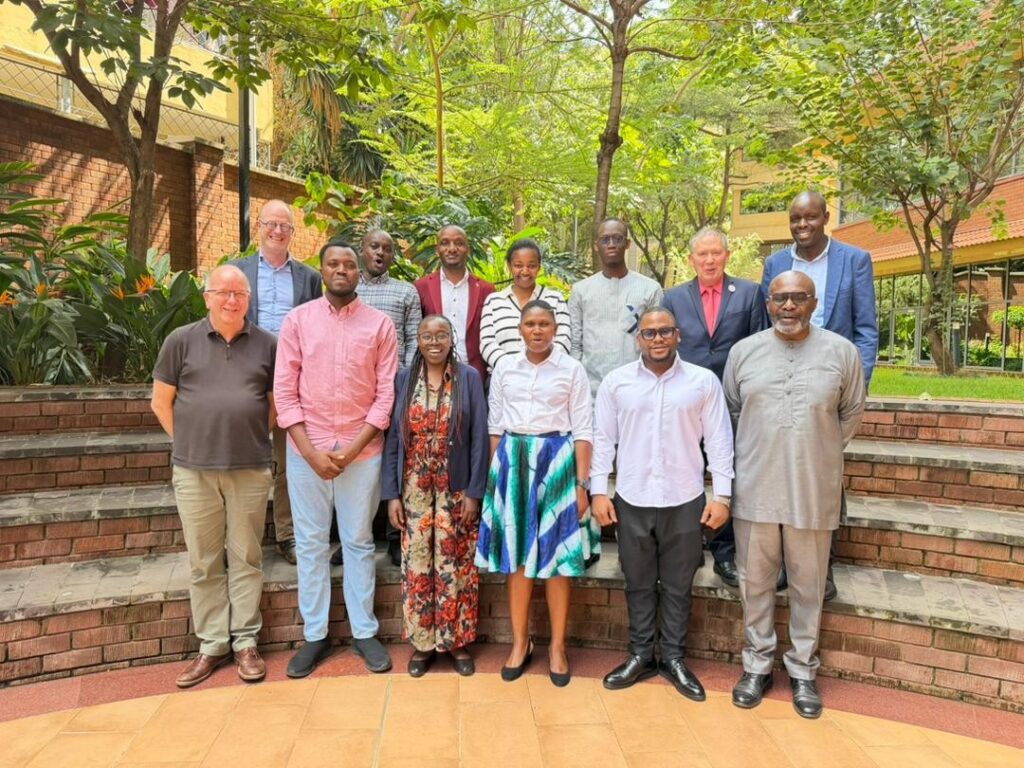
From Theory to Practice: PhD Trainees Take On Health Data Harmonisation in Nairobi Nairobi, Kenya | 18 to 21 May 2026 | OMOP Common Data Model Workshop Ask anyone who works with health data from more than one hospital and you will hear the same complaint. The information exists, but it does not line up. A diagnosis recorded in Kampala may be coded one way, the same diagnosis in Kigali another way, and a third way again in Cape Town. Before any of it can be compared or analysed together, someone has to do the work of making it speak a common language. That work was the focus of a fourday workshop in Nairobi this May, where nine BRIDGE NETWORK PhD trainees came together for their first structured practical research activity: the OMOP Common Data Model (CDM) Workshop. The workshop ran from 18 to 21 May 2026 at the Fairview Hotel, and it marked the point where the trainees stepped out of preparatory and theoretical learning and into hands on research practice. All nine trainees currently in post attended in person, travelling from six institutions across the network: Hillary Koros, Aga Khan University Viola Chepkirui, Aga Khan University Bridget Magoba, Uganda National Institute of Public Health Peter Baranga, Mountains of the Moon University Steven Kerera, Rwanda Biomedical Centre Christian Ndinda, Rwanda Biomedical Centre Farid Ally, Institut Régional de Santé Publique Comlan Alfred Quenum (IRSP-CAQ) Hossana Agbangla, Institut Régional de Santé Publique Comlan Alfred Quenum (IRSP-CAQ) Makinda Ndinda, University of Cape Town Theworkshop opened with an introduction to the BRIDGE NETWORK itself, then moved into federated data networks and the OHDSI ecosystem, the structure of the OMOP Common Data Model, and the standardised vocabularies that allow different datasets to carry shared meaning. From there the week became steadily more practical. Trainees worked through OMOP vocabulary exercises, then moved into the Extract, Transform and Load (ETL) process, mapping source data into the OMOP structure. A session on data quality and OHDSI tools followed, covering how to tell whether harmonised data is complete, consistent and genuinely usable. The centrepiece of the workshop was a mini harmonisation project. Trainees were placed into groups, handed a practical harmonisation task, and left to work on it over the closing days before presenting their results to the consortium members. That presentation session did something a lecture cannot. It gave the trainees space to talk openly about what had gone wrong, which approaches had worked, and what they would do differently next time. For several of them, it was a first real encounter with the messiness of turning heterogeneous health data into a common structure. The workshop was evaluated by the trainees. All nine studens completed the training feedback questionnaire, a 100 percent response rate, producing 117 ratings across 13 evaluation items. The questionnaire covered four areas: learning outcomes and relevance, delivery and instruction, training materials and resources, and impact and application. The results were consistently positive. Trainees reported that the content was relevant to their research and professional goals, that it increased their knowledge, that it addressed real gaps in their skills, and that they felt more confident applying what they had learned. There was also one clear and recurring request: more time. Several trainees were new to the practical side of OMOP CDM and wanted longer with the exercises. It is fair feedback, and it confirms something the network already recognises: harmonisation is a skill built through repetition, not a topic covered once. The workshop leaves the cohort with a shared technical foundation. Each trainee is working on a different doctoral project, but they now have a common vocabulary for talking about data structure, mapping, quality and comparability, which matters a great deal for the cross site and collaborative research the network exists to support. Further practical sessions, refresher training, and project specific technical support are planned as the trainees move deeper into their doctoral research.
Call for applications for a Post-Doctoral Fellowship in Integrated Data Sciences and Health Informatics (Research PhD) (Scope: Infectious Diseases) at the Rwanda Biomedical Centre – RBC
CALL FOR APPLICATIONS NOW OPEN!! Deadline: 11th September 2026 Call for applications for a Post-Doctoral Fellowship in Integrated Data Sciences and Health Informatics (Research PhD) (Scope: Infectious Diseases) at the Rwanda Biomedical Centre – RBC “Scaling Up Research in SSA Countries in Infectious Diseases: African-European Training Network in Integrated Health Informatics and Data Sciences – BRIDGE NETWORK Project” Background About the BRIDGE NETWORK Project Project details: https://doi.org/10.3030/101145734, Project Website: https://bridge-network.eu/ BRIDGE NETWORK is a consortium of 12 leading African and European institutions aiming to train the next generation of experts in integrated health informatics and data sciences applied to infectious diseases domain. Jointly funded by the European Union and the Global Health EDCTP3 , the program is led by Ghent University and aims to establish six Centers of Excellence (CoEs) in Kenya, Rwanda, Uganda, Benin, and South Africa. These CoEs will serve as data hubs for cutting-edge research , world-class training in health data harmonization and analytics, and innovative solutions to tackle infectious diseases that continue to claim millions of lives across the African continent. The BRIDGE NETWORK Training Project will provide: Doctoral and Postdoctoral Fellowships training 14 experts to lead innovative research in data sciences bridged to health informatics and applied to infectious diseases. Postgraduate Certifications awarding maximum 20 certifications per Center of Excellence through a mix of online learning and practical field mentorship, and world-class collaboration by partnering with renowned worldwide institutions. Application fields Title: Post-Doctoral Fellowship in Integrated Data Sciences and Health Informatics (Research PhD)(Scope: Infectious Diseases) Language of application All applications MUST be submitted in English. Recruiting Institution ● Applicants should be Rwandans Only.● Applications should be addressed to the Rwanda Biomedical Centre – RBC Target group Motivated Post-Doctoral Fellows specializing in infectious diseases. The fellow will undertake research on leveraging data sciences to address significant infectious disease challenges in sub-Saharan Africa (SSA) and will supervise PhD students within BRIDGE NETWORK. This position emphasizes data harmonization, analytical method development, and collaborative research in a networked, federated environment. This fellowship is ideal for candidates looking to apply advanced data science methodologies to real-world health data from SSA and lead innovative, data-driven solutions in infectious disease research. Number of scholarships One(01) post-doctoral fellowship in Rwanda. Key Responsibilities 1. Lead and conduct high-level collaborative research on infectious disease topics within the BRIDGE NETWORK Centers of Excellence. 2. Drive research projects that integrate data sciences with health informatics to address infectious disease topics in SSA. 3. Contribute to developing data harmonization frameworks, including Extract, Transform, and Load (ETL) processes, and master the “Observational Medical Outcomes Partnership (OMOP) Common Data Model (CDM)” methodology from the “Observational Health Data Sciences and Informatics (OHDSI)” community . 4. Mentor PhD students and provide supervision on BRIDGE NETWORK activities within the SSA Centers of Excellence (CoEs) – One in Benin located at the Institut Régional de Santé Publique-IRSP, Benin – One in Kenya located at Agha Khan University -Center for Child, Women and Reproductive Health– One in Rwanda located at the Rwanda Biomedical Center – RBC (Scientific Lead)– One in South Africa located at university of Cape Town – UCT– One in Uganda located at Uganda National Institute of Public Health (UNIPH), Ministry of Health.– One in Ethiopia located at Ethiopian Public Health Institute (EPHI) 5. Collaborate with local health institutions, European partners, data sciences projects and other stakeholders to ensure knowledge exchange and to strengthen the local research capacity. 6. Generate scientific publications in peer-reviewed journals and disseminate research findings at international conferences (at least 3publications expected per candidate). 7. Support the creation of interactive data dashboards and disseminationstrategies to inform health policies and public health interventions. Eligibility Criteria To be eligible, applicants should: Be of Rwandan nationality. Commit to dedicate at least 50% of FTE (up to 100%) of time to the fellowship. Have a PhD in Data Sciences, Health Informatics, Computer Sciences, (Bio)Medical Sciences, Public Health or a related field with a focus on infectious diseases or public health data. Witness that the PhD degree was awarded before the date of appointment to the position and has been obtained within the last 5 years (not above) from a recognized university. Prove strong analytical skills with demonstrated experience in data harmonization, data wrangling, and statistical analysis. Ideally have (as an asset) proficiency in statistical packages such as SPSS, R, STATA, or SAS. Ideally have (as an asset) proficiency in programming languages such as SQL, JSON, Python, R, or SAS Witness familiarity with health data harmonization techniques (OMOP, Others) , medical terminology and standardized vocabularies (e.g. SNOMED, ICD). Ideally have (as an asset) prior experience with federated data networks, real-world data analysis, and conducting multi-institutional studies. Demonstrate a record of scholarly research, including publications and conference presentations in health informatics, data sciences, or medicine. Focus on infectious diseases is an asset. Have experience with ethical and regulatory aspects of clinical and health data management is an asset. Have excellent interpersonal and communication skills to collaborate across disciplines, institutions, and international partners. Note: Women are highly encouraged to apply. In case of equal application file score, preference will be given to women. How to apply The application process contains two steps – First step: Applicants must apply to Rwanda Biomedical Center -RBC (Contact: Prof Dr Claude Muvunyi Mambo, MD, PhD -Director General. E-mail: claude.muvunyi@rbc.gov.rw and copy to jclaude.ngabonziza@rbc.gov.rw) o Documents to provide while applying for this first step: Motivation letter to the BRIDGE NETWORK Coordinator, specifying – the area of interest for your PhD research, ideally a high-level topic title (with 10 lines maximum concept idea) in the area of infectious diseases where you leverage combined health informatics skills and data sciences techniques. Copies of academic degrees (from baccalaureate) 3 letters of recommendation (from at least 1 Associate Professor level) from the institutions attended by the applicant Curriculum vitae including when applicable, a list of scientific publications and justify any trajectory gap in CV if any. Application Deadline for the First step:11th September 2026. – Second
Call for applications for a Post-Doctoral Fellowship at the University of Cape Town

Call for applications for a Post-Doctoral Fellowship at the University of Cape Town “Scaling Up Research in SSA Countries in Infectious Diseases: African-European Training Network in Integrated Health Informatics and Data Sciences – BRIDGE NETWORK Project” Background About the BRIDGE NETWORK Project Project details: https://doi.org/10.3030/101145734 Home – BRIDGE NETWORK BRIDGE NETWORK is a consortium of 12 leading African and European institutions aiming to train the next generation of experts in integrated health informatics and data sciences applied to infectious diseases domain. Jointly funded by the European Union and the Global Health EDCTP3 , the program is led by Ghent University and aims to establish six BRIDGE NETWORK Nodes (BNNs) in Kenya, Rwanda, Uganda, Benin, Ethiopia, and South Africa. These BNNs will serve as data hubs for cutting-edge research, world-class training in health data harmonization and analytics, and innovative solutions to tackle infectious diseases that continue to claim millions of lives across the African continent. The BRIDGE NETWORK Training Project provides: · Doctoral and Postdoctoral Fellowships training to 14 experts who will lead innovative research in data sciences bridged to health informatics and applied to infectious diseases. · Postgraduate Certifications awarding up to 20 certifications per participating country through a mix of online learning and practical field mentorship, and world-class collaboration by partnering with renowned worldwide institutions. Application fields Title: Post-Doctoral Fellowship in Integrated Data Sciences and Health Informatics (Scope: Infectious Diseases) Language of application All applications MUST be submitted in English. Degree awarding institution University of Cape Town (UCT), Western Cape, South Africa Target group: Motivated Post-Doctoral Fellows specializing in infectious diseases. The fellow will undertake research on leveraging data sciences to address significant infectious disease challenges in sub-Saharan Africa (SSA) and will mentor PhD students within the BRIDGE NETWORK. This position emphasizes data harmonization, analytical method development, and collaborative research. This fellowship is ideal for candidates passionate about applying advanced data science methodologies to real-world health data from SSA and excited to lead innovative, data-driven solutions in infectious disease research. Number of scholarships: One post-doctoral fellowship at the University of Cape Town (UCT) currently available Eligibility Criteria 1. Should be a resident or citizen of one of the participating BRIDGE Network countries at the time of the application (Rwanda, South Africa, Kenya, Benin, Uganda, Ethiopia) 2. Should commit to stay and work in South Africa during the award period, with potential travel to other BRIDGE NETWORK countries 3. Must have a doctoral degree obtained within the last 5 years in public health, epidemiology, biostatistics, clinical informatics, or an aligned medical, computational or information sciences discipline 4. Must fulfil the requirements of admission at UCT 5. Must have a passport or be willing and eligible to apply for one 6. Available to dedicate at least 50% of FTE (up to 100%) of time to the fellowship, for the equivalent of 18 months full-time duration, or up to 36 months part-time. 7. Strong analytical skills with demonstrated experience in data harmonization, data engineering and statistical analysis. 8. Coding proficiency in statistical packages and ideally also in SQL, python and other coding languages 9. Demonstrate a record of scholarly research, including publications and conference presentations in BRIDGE NETWORK focus areas. 10. Experience with ethical and regulatory aspects of clinical and health data management would be an asset 11. Have excellent interpersonal and communication skills to collaborate across disciplines, institutions, and international partners. Key Responsibilities 12. Lead and conduct collaborative research on infectious disease topics within the BRIDGE NETWORK nodes. 13. Support the host institution’s collaboration with government to evolve routine information systems to support both service delivery and research. 14. Mentor PhD students and provide supervision on BRIDGE NETWORK activities within the SSA BRIDGE NETWORK Nodes (BNNs) 15. Collaborate with local health institutions, European partners, data sciences projects and other stakeholders to ensure knowledge exchange and to strengthen the local research capacity. 16. Generate scientific publications in peer-reviewed journals and disseminate research findings at international conferences 17. Support the creation of interactive data dashboards and dissemination strategies to inform health policies and public health interventions. 18. Steward BRIDGE journal clubs together with the other post-doctoral fellows in the BRIDGE NETWORK How to apply The application process contains two steps – First step: Applicants must apply to Centre for Integrated Data and Epidemiological Research (CIDER) at UCT (Contact: Dr Meg Osler meg.osler@uct.ac.za ) o Documents to provide while applying for this first step: – Motivation letter to the BRIDGE NETWORK leads, specifying -The area of interest for your post-doctoral research, ideally a high-level topic title (with 10 lines maximum concept idea) in the area of infectious diseases where you leverage combined health informatics skills and data sciences techniques or potentially a topic aligned with one of the focus areas of CIDER. – Copies of academic degrees (from baccalaureate) – 2 letters of recommendation from the institutions attended by the applicant – Curriculum vitae including a list of scientific publications and justification of any career trajectory gaps Application Deadline for the First step: 9th July 2026. – Second step: o The BRIDGE NETWORK reserves the right of final pre-selection. Only pre-selected candidates are asked to enter into a further selection process for the funded fellowship. o The selected candidate if they accept the funding, applies to the host institution for admission as a post-doctoral fellow, which can begin as soon as acceptance is received. What we offer · We offer a highly competitive fellowship stipend for the duration of the fellowship, pro-rata to the level of effort (50%-100%). · Opportunities for advanced training and professional development within the BRIDGE NETWORK program · Access to mentorship from a diverse, international team of experts · Opportunities to work in Country Health Data Hubs across SSA and collaborate with European research institutions.
Call for PHD Applications

Call for PhD Scholarship Applications “Scaling Up Research in SSA Countries in Infectious Diseases: African-European Training Network in Integrated Health Informatics and Data Sciences – BRIDGE NETWORK Project” Background About the BRIDGE NETWORK Program Project details: https://doi.org/10.3030/101145734 BRIDGE NETWORK is a consortium of 12 leading African and European institutions aiming to train the next generation of experts in integrated health informatics and data sciences applied to infectious diseases domain. Jointly funded by the European Union and the Global Health EDCTP3, the program is coordinated by Ghent University and aims to establish five Centers of Excellence (CoEs) in Kenya, Rwanda, Uganda, Benin, and South Africa. These CoEs will serve as data hubs for cutting-edge research, world-class training in health data harmonization and analytics, and innovative solutions to tackle infectious diseases that continue to claim millions of lives across the African continent. The BRIDGE NETWORK Training Program will provide: · Doctoral and Postdoctoral Fellowships training to 14 experts who will lead innovative research in data sciences bridged to health informatics and applied to infectious diseases. · Postgraduate Certifications awarding at least 20 certifications per participating country through a mix of online learning and practical field mentorship, and world-class collaboration by partnering with renowned worldwide institutions. Application fields Title: Doctoral Scholarship in Integrated Data Science and Health Informatics (Research PhD) (Major: Infectious Diseases) Language of application All applications MUST be submitted in English. Degree awarding institutions University of Rwanda (in partnership with Rwanda Biomedical Centre – RBC) Target group: Graduates and postgraduates from Sub-Saharan Africa with a master’s degree who want to pursue studies in a new innovative PhD program combining data science techniques and health informatics applied to infectious diseases, and motivated to work and drive innovation and resilience in the region’s health systems in their home country and in sub-Saharan Africa in general. Number of scholarships: One (01) Eligibility criteria – To be eligible, applicants: 1. Must never have been enrolled in another PhD program at the date of their recruitment 2. Should be a resident of Kenya at the time of Application. 3. Should commit to stay and work in Kenya during the project period, however training rotations or internships are allowed in BRIDGE NETWORK Countries. 4. Must have a master’s degree in data sciences, Information Technology, or Health Sciences. 5. Must fulfill the requirements of admission in the PhD awarding university – University of Rwanda 6. Be not older than 45 years. How to apply The application process contains two steps – First step: o Applicants must send applications to Agha Khan University Kenya – Center for Child, Women and Reproductive Health (Contact: Prof Dr Marleen Temmerman, MD, PhD -Director. E-mail: marleen.temmerman@aku.edu) o Documents to provide while applying for this first step: · Motivation letter to the BRIDGE NETWORK Coordinator, specifying -The university chosen for PhD award -Please read the degree awarding university regulations and PhD admission requirements upfront (mandatory) -The area of interest for your PhD research, ideally a high-level topic title (with 10 lines maximum concept idea) in the area of infectious disease where you leverage combined health informatics skills and data sciences techniques (asset). · Copies of academic degrees (from baccalaureate) · Certified copies of academic transcripts (from the baccalaureate). Please supply the official explanation of the grading system if used. · Three letters of recommendation (from at least Associate Professors) from the institutions attended by the applicant · Certified copy of the birth certificate · Curriculum vitae including when applicable, a list of scientific publications and justify any trajectory gap in CV if any. Application Deadline for the First step: 27th March 2026. – Second step: o BRIDGE NETWORK reserves the right of final pre-selection. Only the pre- selected candidate will be asked to register themselves to the chosen university (with supporting letter from BRIDGE NETWORK). University Admission Application Deadline: 31st March 2026. Duration and Commencement PhD programme is generally up to three years (with possible 6 months extension, maximum and exceptionally twice) and is usually starting as soon as the admission is guaranteed. Prof Dr Claude MuvunyiMambo, MD, PhDDirector GeneralRwanda Biomedical Center -RBCBRIDGE NETWORK Project -Scientific Lead (Work Package -WP2, Lead) E-mail: claude.muvunyi@rbc.gov.rw DOWNLOAD PHD ADVERT Share this page→ Twitter LinkedIn WhatsApp Email